When deal flow stalls, the default reaction is to buy more records. It feels like progress — the pipeline number goes up, the dialer stays busy, everyone is working. But volume is the most expensive lever available, and it is usually pulled to avoid a harder question: are we calling the right places at all?
Volume hides bad targeting
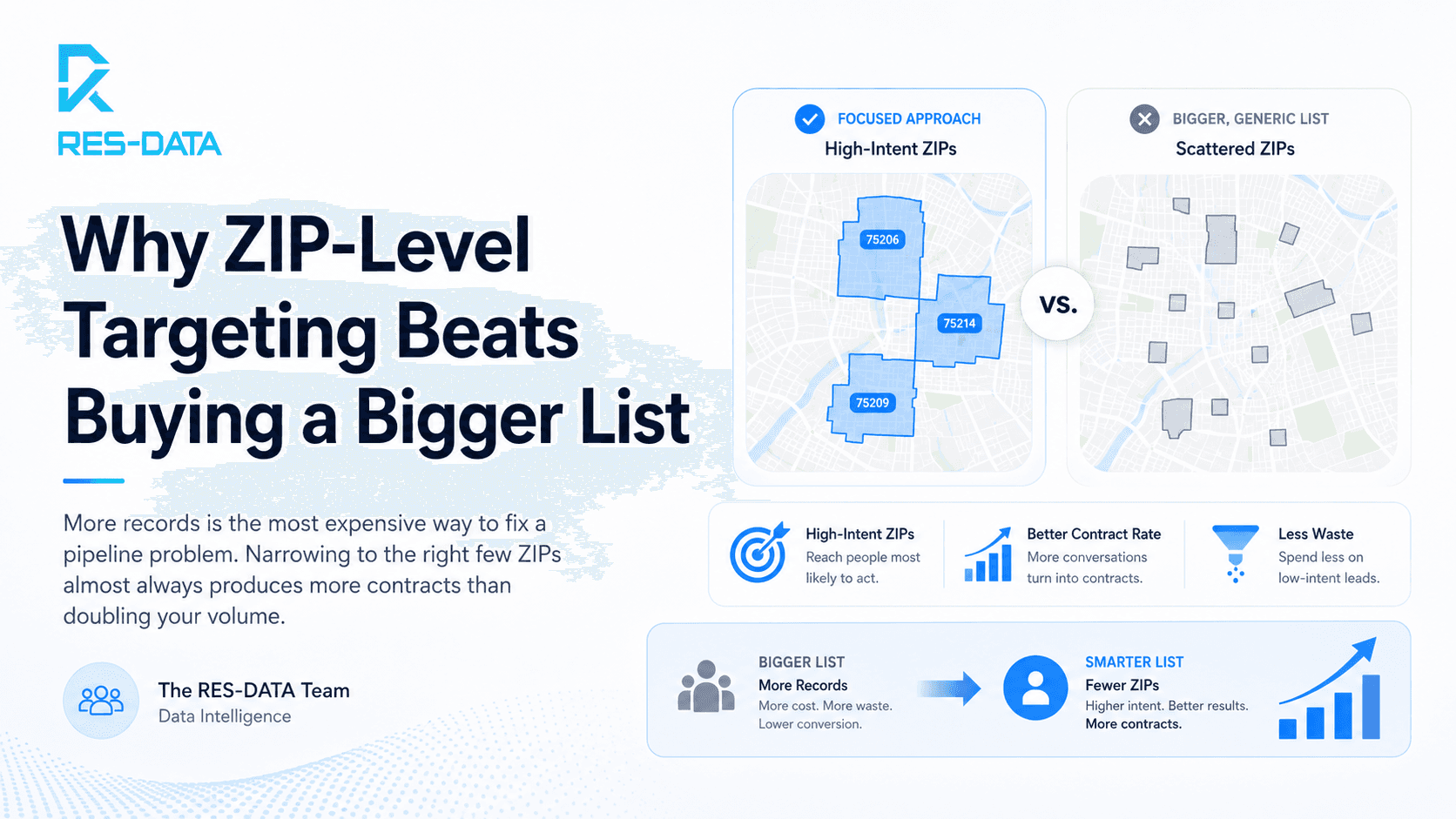
A list twice the size with the same conversion rate produces twice the deals and twice the cost. Nothing has improved except throughput. Meanwhile a market where owners have equity, motivation, and a reason to move this year can convert several times better than the county average — and it is usually a handful of ZIPs, not a whole metro.
The uncomfortable math: concentrating the same spend into the right 20% of a market routinely beats doubling volume across all of it. You are not calling fewer people, you are calling fewer wrong people.
The signals that actually separate ZIPs
Not every data point that correlates with distress is worth targeting on. These are the ones that consistently move contract rates:
- Equity position. Owners without room to negotiate cannot take your offer, however motivated they are.
- Tenure. Long-held properties concentrate both equity and life-stage triggers.
- Absentee density. Out-of-state owners behave differently from owner-occupants and respond to different conversations.
- Turnover velocity. How fast comparable properties actually trade — a proxy for whether your exit exists.
- Competitive saturation. How hard the ZIP is already being worked by other buyers.
The last one gets skipped most often and explains most of the surprises. A ZIP can look perfect on every distress metric and still convert terribly because thirty other investors reached the same conclusion from the same public data.
Read the map before you buy the list
The practical sequence is unglamorous. Start from your own closed deals — not your leads, your closings — and map them. Most operators find their contracts cluster far more tightly than their outreach does. That gap is the opportunity.
From there, look for ZIPs that resemble your winners on the signals above but that you are under-calling. Then size the outreach to what your team can actually work with real follow-up, because a smaller list worked three times beats a larger one worked once. Follow-up is where the deals are, and follow-up capacity is finite.
Then let results redraw the map
Targeting is not a decision you make once. Contract rate by ZIP, cost per contract by ZIP, and connection rate by ZIP should be reviewed on a schedule, and the map should change when they do. A market that produced last quarter can saturate in a single season.
This is the part most list vendors cannot help with, because they sell access to data and stop there. Deciding what to target and why, then adjusting as the numbers come in, is the difference between owning a dataset and running a data strategy.
If you want to see what that looks like against your own market, a custom market analysis is the fastest way to find out where your next contracts are hiding.